
Last week in this space, I ranted (in verse) about gerrymandering — the art of carving up voting districts so one party, whichever holds the majority, can rig the constituency and call it fair. If you missed that column (yes, it really was in verse), you can read it HERE. But, come back, because as I warned last week, there is more.
My predictions are already proving true.
And let me assure you this is not a one-party tirade. Gerrymandering is a bipartisan disease that impacts our democracy and limits our rights.
Both sides catch it whenever power comes their way, and each side justifies it by pointing to the sins of the other. We hear, “They started it,” or “We’re just evening the score.”
If you defend democracy by figuring out how to bypass democracy, then we all lose.
The first shot, this time, came from Texas, where politicians voted Wednesday to redraw congressional maps in the middle of the decade, a sharp departure from the traditional cycle that has generally followed census results at the end of each decade.
Why now? Because Donald Trump asked Texas legislators to figure out how to secure five more Republican seats in the U.S. House of Representatives, without having to win a single additional vote.
Really? Five more seats, zero more votes? Whether you are red or blue, someone please tell me why that makes sense. My cynicism is showing.
But does it stop in Texas? Hardly…
California Democrats jumped up to retaliate. Governor Gavin Newsom wrote a letter to President Trump warning that the president is “playing with fire.” Following the Texas realignment Wednesday evening, Newson tweeted “It’s on, Texas.”
Newsom, certainly no novice to political theater, had declared that if Texas were to redraw districts, California would reciprocate, ensuring the five more California House Democrats.
California has an independent redistricting commission, intended to legitimize district drawing, and Democrats will have to gain that approval (a task not required in Texas) to effect change, but blue states, as well as red, can justify almost anything if the other guys seem to be getting an advantage.
So, will other states follow? Guess.
Missouri Republicans are now considering a special redistricting session, with Trump’s urging, and New York Democrats introduced legislation to allow mid-decade district redrawing, something that was previously off-limits under their independent commission.
Wisconsin Democrats don’t control their legislature, so they are taking a different approach, asking the liberal Wisconsin Supreme Court to force a redraw before next year’s elections.
Maryland Democrats are drafting legislation to allow redistricting whenever another state does it, and Florida’s Ron DeSantis told voters to “stay tuned” for his own redistricting ambitions. Lawmakers in Ohio, Indiana, New Jersey, Louisiana, Illinois, and Kansas are all looking at their redistricting options this year. The race is on.
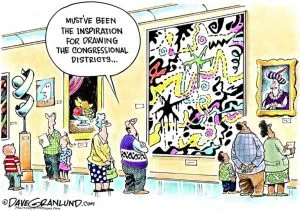
What does this mean for we, the people? A woman told me this week, “Why vote if it’s not going to make any difference?” Yeah, why? When both sides of the aisle carve districts up to ensure safe seats for their own party, voters risk being reduced to background noise.
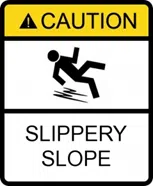
This slippery slope results in elections becoming controlled more by creative drawing than creative policy. Sharpen your pencils, the voters be damned.
If victory is assured, do the voters really matter? Why compromise? Why listen? Quit doing town halls. The Cook Political Report notes that twenty states had exactly zero competitive districts in 2024, while in eighteen other states less than 25 percent were competitive.
When general elections don’t matter, the real fight shifts to low-turnout primaries — where the loudest voices often drown out the moderate majority, translating into less representation and less accountability to us
Is there hope? Some states have independent redistricting commissions. California and New York have them, but we all know that politicians will sidestep when they can. Michigan and Arizona use them, too. It is a step that gives us a chance.
Another solution might be national legislation that sets fair standards for redistricting. Congress has the power, but… Who among us expects the body most addicted to their safe districts to stand up for the people?
Or we could hope for candidates that promote policies and programs that constituencies support, instead of cutting out sections of the constituency to get reelected. It’s called legislating for the majority; admittedly, a long shot.
What if we, the people, just said NO? What if we demanded change and stopped cheering when our side out-cheats the other side?
Gerrymandering is not clever. It’s cowardly. It’s not a sign of strength but of weakness — an admission that our self-proclaimed leaders cannot persuade voters to support them honestly.
Democracy is not about securing five more wins without earning five more votes. It’s about leadership, integrity, and trust, traits much more easily lost than regained.
Curt MacRae, a resident of Coldwater, MI, publishes regular opinion columns
To be notified by email when a column is published, or to offer feedback: rantsbymac@gmail.com




Comments