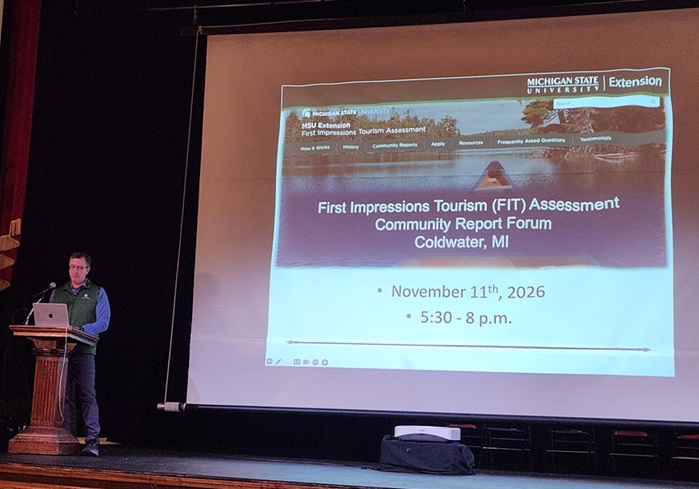
COLDWATER, MI (WTVB) – Around 50 people gathered Wednesday evening at the Tibbits Opera House to hear a mostly positive assessment of the Coldwater area, with the presentation of a report from the Michigan State University Extension’s First Impressions Tourism (FIT) program.
As part of this community assessment initiative, five unannounced volunteers were sent into Coldwater this past July and August to evaluate the town’s unique assets, local tourism offerings, and overall visitor experience.
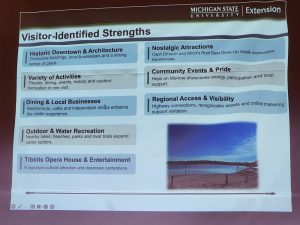
The program’s Andy Northrup told the gathering of city officials, business owners, and others from the community that visitor-identified strengths included a historic downtown and architecture; a variety of activities like theatre at the Tibbits Opera House, events, and outdoor recreation; nostalgic activites like the Capri Drive-In and Short’s Rootbeer Stand; regional access and visibility because of I-69 and US-12; and community events and pride, with things like Hops on Monroe showcasing energy, participation, and local support.
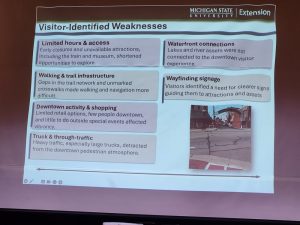
Among the visitor-identified weaknesses were limited hours and access to attractions like the Little River Railroad and Wing House Museum, which shortened opportunties to explore; heavy truck and and through-traffic on US-12 that detracts from the downtown pedestrian atmosphere; gaps in the walking trail network and unmarked crosswalks which made navigation more difficult; limited retail options and little to do outside of special events, which affected vibrancy; and lakes and river assests not connected to the downtown visitor experience.
A committee consisting of the Coldwater Mainstreet Program, Downtown Development Authority, city officials, and others in the community now plans to review the recommendations from the report and implement ideas as possible.
The First Impressions Tourism program is designed to provide feedback to local communities, highlighting the great, the good, and the bad, while providing actionable insights to help shape local development strategies, with the primary objectives of the FIT program to focus on helping the community view its local assets from a fresh perspective, identifying key opportunities for community improvement, and teaching foundational concepts in place-making.



Comments